Home
Home
Recreational sailing is rapidly evolving thanks to smart technology. Today, tools like rugged tablets allow sailors to access key information in real time, significantly improving safety, efficiency, and onboard experience.
Far from replacing traditional navigation, technology complements and enhances it. In this context, solutions like SailProof have become an essential ally for those seeking to sail with greater confidence. To explore this shift, we turn to Tomás Ruiz, a content creator specializing in solo sailing and director of a sailing school.
The Role of Technology in Modern Sailing
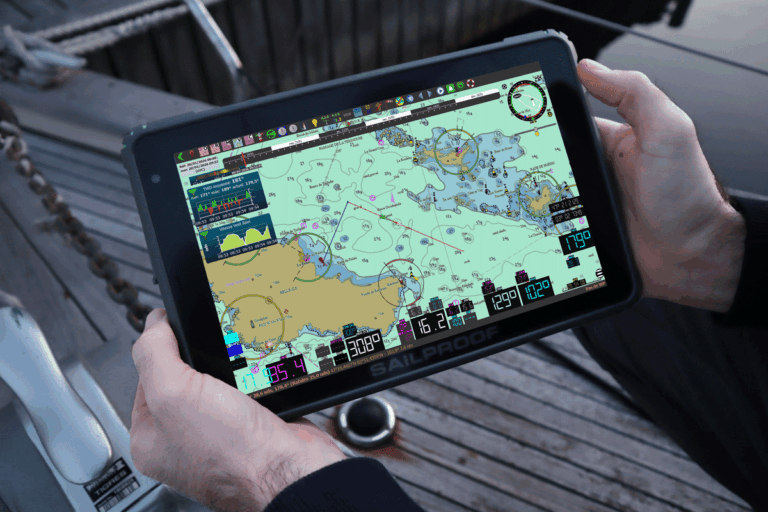
“Technology today is essential,” explains Tomás. “We have tools that not only make navigation easier but also enhance safety.” Access to digital charts, wind data, and weather forecasts allows sailors to anticipate risks and make more informed decisions. A “marine-grade” tablet becomes a true control center onboard, integrating all the necessary information on a reliable screen.
Despite its advantages, many sailors make mistakes, such as relying on technology without fully understanding it or delegating navigation entirely to it. “No system replaces active watchkeeping or the ability to anticipate changing situations. Technology should support, not substitute,” notes Tomás.
How to Make the Most of Digital Navigation
To fully leverage technology, it’s not enough to simply have access to it; you need to integrate it into your navigation. A proper combination of up-to-date digital charts, real-time weather apps, GPS positioning systems, and planning tools allows for safer and more precise decision-making. The key is to cross-reference information and use it strategically.
Why Choose a Rugged Tablet Like SailProof
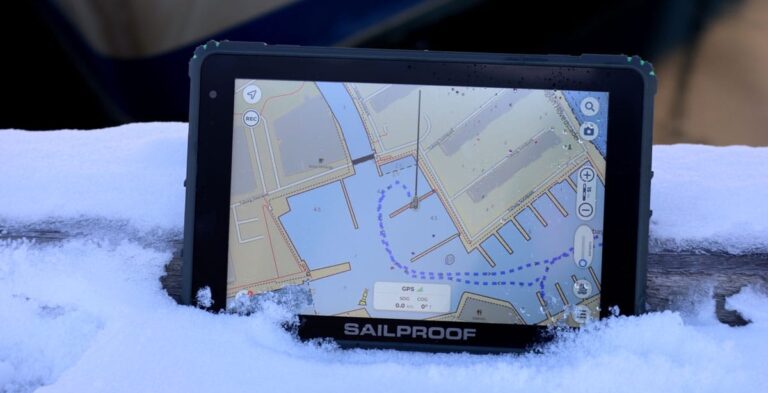
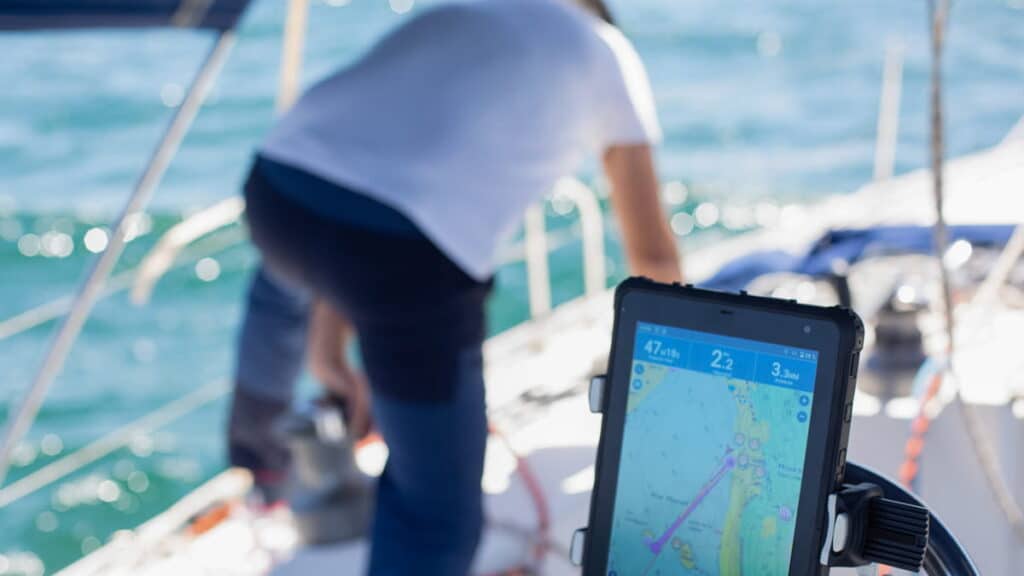
Using devices specifically designed for the sea is crucial. SailProof tablets are built to perform in real sailing conditions, with screens visible even under bright sunlight, usability with wet hands, and resistance to water and impacts. At sea, equipment reliability isn’t a luxury—it’s a necessity.
The Importance of Digital Training in Sailing
One of the biggest current challenges is training. As Tomás explains, formal training—especially in Spain—often focuses on passing exams rather than teaching sailors how to navigate real situations.
In many cases, “sailors don’t learn how to handle a digital chart, interpret weather data in an app, or understand fundamental aspects of the boat like winch use, sail trimming, or the correct order to deploy sails,” he says. These are basic skills that make a difference at sea, yet they are rarely covered in depth in traditional certifications.
That’s why he developed his own training program, the “Velas al Viento” course, which teaches the full process from scratch in a practical, applied way. This hands-on, online approach represents a real revolution in digital sailing education.
The Future of Sailing: Technology and Knowledge
Digitalization will continue to shape the future of recreational sailing. However, true value lies not just in technology, but in the sailor’s ability to use it correctly. The combination of experience, training, and the right tools is what allows for safer, more confident navigation. In this new scenario, SailProof provides more than technology—it is part of a broader evolution toward more conscious, connected, and prepared sailing.